

The heatwave in China’s Sichuan province is persisting so badly that the government has deployed drones to seed rain clouds to try and trigger some form of precipitation.
China news daily reported that on Thursday, the Chinese government, through the China Meteorological Administration “used its self-developed Wing Loong-2H UAV to assist fight against drought in SW China’s Sichuan. The drone ignited 20 silver iodide flame bars during its 4-hour flight to create "artificial rain" for the drought-hit region.”
News outlet CCTV further reported that meteorological department launched drones in northern and south eastern Sichuan on Thursday morning, with the autonomous aircraft set to eventually cover an area of 6,000 square kilometres in operations that were scheduled until Monday next week.
The plan seems to be working too – heavy rain hit parts of the province on Thursday night, forcing officials to relocate about 30,000 people living in danger zones, state-owned CCTV said.
Typically, cloud seeding works by dropping an ice-forming agent – like the silver iodide flame bars despatched in this case – into a cloud that already contains ample moisture. Rain droplets gather around the agent, gaining weight until they begin to fall.
China has a long history of using cloud seeding technology to water crop fields, cool blistering cities and make sure skies are clear for events like the Olympics.
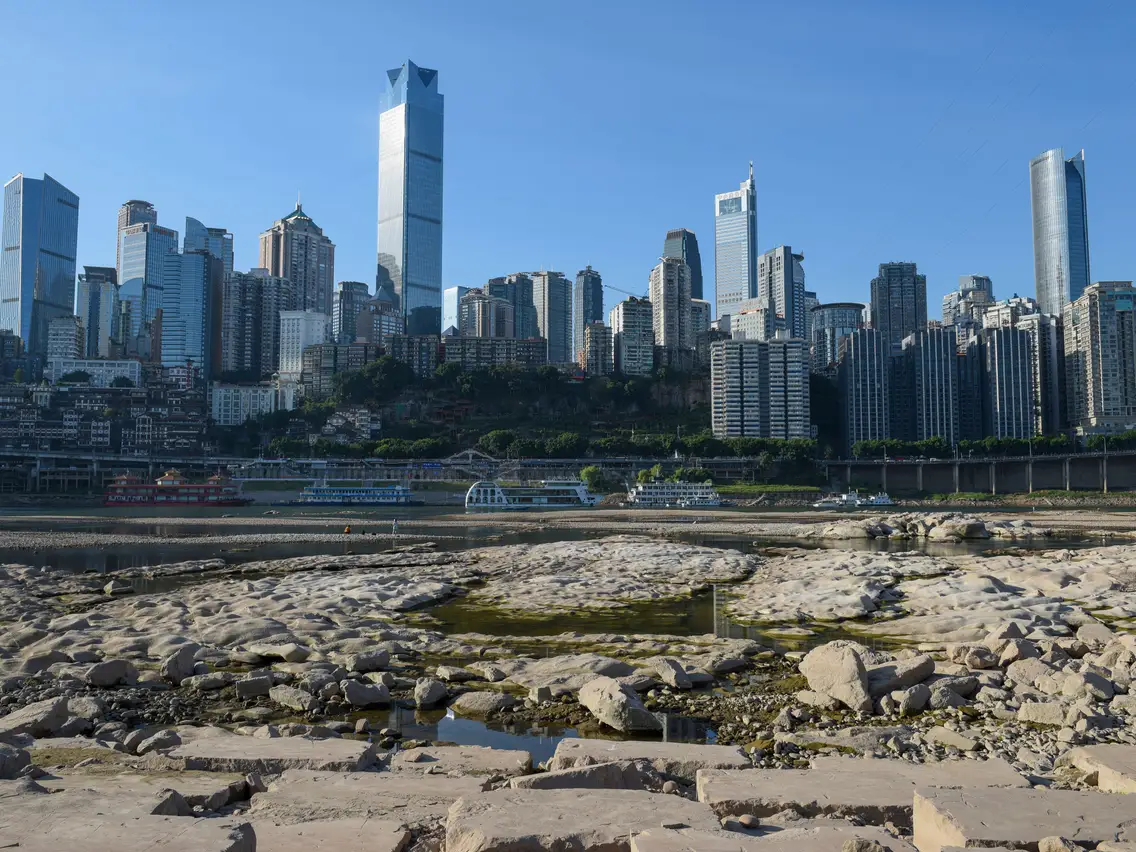
Rising temperatures have forced local governments in Sichuan and Chongqing to resort to power cuts for industrial plants and households, as the heat and severe drought has increased air conditioning use while depleting hydropower reserves on which the region depends.
Temperatures in Chengdu, Sichuan’s capital, are forecast to fall to 31 degrees Celsius on Friday, according to the meteorological administration. As Business Insider reports, the extreme weather, which has persisted for over 70 days, is starting to weigh on China's industrial activity and economic growth.
Since the start of August, hydropower plants in Sichuan have been operating below 50 percent of their regular capacity, which has led to power cuts in the region, forcing auto giant Toyota and Apple supplier Foxconn to suspend operations.
The dry weather has also damaged crops and could hurt the fall harvest.
Still, this year’s drought is better than last year, which saw more widespread power cuts, noted ING's chief economist for Greater China, Iris Pang.
"We have yet to see factory suspension in key cities, which is a relief to the government as the economy is already weak," Pang wrote in a Thursday note, estimating the power shortage to have impacted around one percent of China's GDP so far.